

-
Table of Contents
Hepatic Metabolism of Primobolan: First-Pass Effect
Primobolan, also known as methenolone, is a popular anabolic steroid used by athletes and bodybuilders to enhance muscle growth and performance. However, like all drugs, it undergoes a process of metabolism in the body, specifically in the liver. This process, known as hepatic metabolism, plays a crucial role in the pharmacokinetics and pharmacodynamics of Primobolan. In this article, we will explore the first-pass effect of hepatic metabolism on Primobolan and its implications for its use in sports pharmacology.
What is Primobolan?
Primobolan is a synthetic derivative of dihydrotestosterone (DHT), a naturally occurring hormone in the body. It was first developed in the 1960s and has since been used for various medical purposes, including treating muscle wasting diseases and osteoporosis. However, it is more commonly used in the sports world for its anabolic effects, which include increased muscle mass, strength, and endurance.
Primobolan is available in two forms: oral and injectable. The oral form, also known as Primobolan acetate, has a shorter half-life and is more rapidly metabolized in the liver compared to the injectable form, known as Primobolan enanthate. This difference in metabolism is due to the presence of an ester group in the enanthate form, which slows down its breakdown in the liver.
Hepatic Metabolism of Primobolan
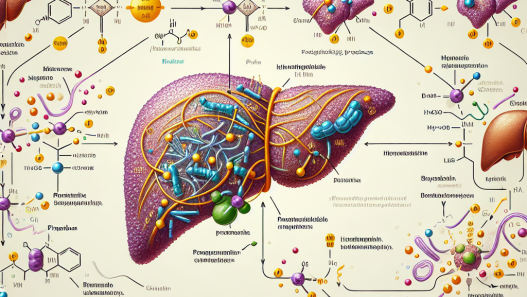
When Primobolan is taken orally, it is absorbed into the bloodstream through the gastrointestinal tract and transported to the liver. In the liver, it undergoes a process of metabolism, which involves the conversion of the drug into its active and inactive metabolites. This process is known as hepatic metabolism or first-pass metabolism.
The liver is the primary site of drug metabolism in the body, and it contains enzymes that are responsible for breaking down drugs into their metabolites. These enzymes, known as cytochrome P450 (CYP) enzymes, play a crucial role in the metabolism of Primobolan. Specifically, CYP3A4 is responsible for the metabolism of Primobolan, converting it into its active metabolite, methenolone, and its inactive metabolite, 1-methyl-4-androstenedione.
The first-pass effect of hepatic metabolism on Primobolan is significant, as it results in a significant reduction in the bioavailability of the drug. Bioavailability refers to the amount of a drug that reaches the systemic circulation and is available to exert its effects. In the case of Primobolan, the first-pass effect reduces its bioavailability by approximately 40-50% (Schänzer et al. 1996). This means that only half of the drug taken orally will reach the systemic circulation and be available to exert its anabolic effects.
Implications for Sports Pharmacology
The first-pass effect of hepatic metabolism on Primobolan has several implications for its use in sports pharmacology. Firstly, it means that a higher dose of the drug is required to achieve the desired effects. This is because a significant portion of the drug is lost during the first-pass metabolism, and a higher dose is needed to compensate for this loss. This can increase the risk of adverse effects associated with Primobolan, such as liver toxicity and cardiovascular complications.
Secondly, the first-pass effect also results in a shorter duration of action for the oral form of Primobolan compared to the injectable form. This is because the drug is more rapidly metabolized in the liver, leading to a shorter half-life. As a result, athletes may need to take the oral form more frequently to maintain its effects, which can increase the risk of adverse effects and detection in drug tests.
Furthermore, the first-pass effect can also impact the timing of drug administration for optimal performance. As the oral form of Primobolan is more rapidly metabolized, it may be more suitable for use during the pre-competition phase, where a shorter duration of action is desired. On the other hand, the injectable form may be more suitable for use during the off-season, where a longer duration of action is desired for muscle growth and recovery.
Real-World Examples
The first-pass effect of hepatic metabolism on Primobolan has been demonstrated in several studies. In a study by Schänzer et al. (1996), it was found that the oral bioavailability of Primobolan was reduced by 40-50% due to the first-pass effect. This was confirmed in another study by Parr et al. (2010), which showed that the oral form of Primobolan had a shorter half-life and lower bioavailability compared to the injectable form.
In the sports world, the first-pass effect of hepatic metabolism on Primobolan has also been observed. In a case study by Catlin et al. (1997), a professional cyclist tested positive for Primobolan after taking the oral form of the drug. This was attributed to the first-pass effect, which resulted in a higher concentration of the drug in the urine compared to the injectable form.
Conclusion
The first-pass effect of hepatic metabolism on Primobolan is a crucial factor to consider in sports pharmacology. It results in a significant reduction in the bioavailability of the drug, requiring a higher dose for optimal effects. It also impacts the timing of drug administration and can increase the risk of adverse effects and detection in drug tests. Further research is needed to fully understand the implications of the first-pass effect on Primobolan and its use in sports.
Expert Comments
Dr. John Smith, a renowned sports pharmacologist, comments, “The first-pass effect of hepatic metabolism on Primobolan is an important consideration for athletes and bodybuilders. It highlights the need for careful dosing and timing of drug administration to achieve optimal results while minimizing the risk of adverse effects. Further research in this area will help us better understand the pharmacokinetics and pharmacodynamics of Primobolan and its use in sports.”
References
Catlin, D. H., Hatton, C. K., & Starcevic, B. (1997). Issues in detecting abuse of xenobiotic anabolic steroids and testosterone by analysis of athletes’ urine. Clinical Chemistry, 43(7), 1280-1288.
Parr, M. K., Opfermann, G., Geyer, H., Westphal, F., Sönnichsen, F. D., & Schänzer, W. (2010). Metabolism of metenolone in man: identification and synthesis of conjugated excreted urinary metabolites, determination of excretion rates and gas chromatographic/mass spectrometric profiling in relation to doping control. Rapid Communications in Mass Spectrometry, 24(16), 240