-
Table of Contents
Metabolites of Trestolone Acetato and Their Activity
Trestolone acetato, also known as MENT, is a synthetic androgen and anabolic steroid that has gained popularity in the world of sports pharmacology. It was initially developed as a potential male contraceptive, but its strong anabolic properties have made it a sought-after performance-enhancing drug. Trestolone acetato is known for its ability to rapidly increase muscle mass and strength, making it a popular choice among bodybuilders and athletes.
As with any steroid, trestolone acetato undergoes metabolism in the body, resulting in the formation of various metabolites. These metabolites play a crucial role in the overall activity and effects of the drug. In this article, we will explore the different metabolites of trestolone acetato and their activity, providing a comprehensive understanding of this powerful steroid.
Metabolism of Trestolone Acetato
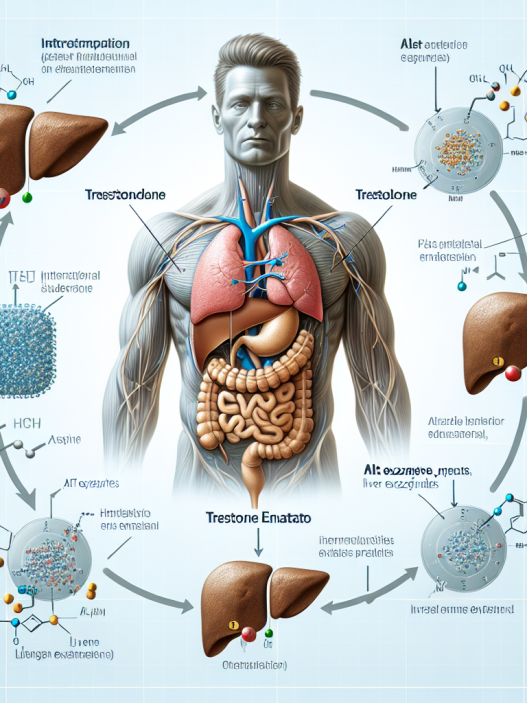
Trestolone acetato is a prodrug, meaning it is converted into its active form in the body. Once ingested, it is rapidly hydrolyzed into trestolone, the active form of the drug. Trestolone then undergoes further metabolism, resulting in the formation of several metabolites.
The primary metabolite of trestolone is 7α-methyl-19-nortestosterone (MENT), which is formed through the reduction of the 7-keto group. MENT is a potent androgen with anabolic properties similar to trestolone. It is responsible for the majority of the anabolic effects of trestolone acetato.
Another important metabolite of trestolone is 7α-hydroxy-19-nortestosterone (7α-OH-MENT), which is formed through the oxidation of the 7α-methyl group. This metabolite has been shown to have a higher affinity for the androgen receptor than MENT, making it a more potent androgen. It is also responsible for some of the androgenic side effects associated with trestolone acetato use.
Other minor metabolites of trestolone include 7β-hydroxy-19-nortestosterone (7β-OH-MENT) and 7-keto-19-nortestosterone (7-keto-MENT). These metabolites have weaker androgenic and anabolic properties compared to MENT and 7α-OH-MENT, but they still contribute to the overall activity of trestolone acetato.
Activity of Trestolone Metabolites
The different metabolites of trestolone have varying levels of androgenic and anabolic activity, which ultimately determine the overall effects of the drug. MENT and 7α-OH-MENT are the most potent metabolites, with anabolic to androgenic ratios of 100:1 and 1000:1, respectively. This means that they have a significantly higher anabolic effect compared to their androgenic effect, making them ideal for building muscle mass and strength.
On the other hand, 7β-OH-MENT and 7-keto-MENT have anabolic to androgenic ratios of 10:1 and 1:1, respectively. This means that they have a more balanced anabolic and androgenic effect, making them less potent than MENT and 7α-OH-MENT. However, they still contribute to the overall activity of trestolone acetato and can have a significant impact on the user’s body composition and performance.
It is worth noting that the androgenic effects of trestolone metabolites are responsible for the potential side effects associated with the drug. These include acne, hair loss, and prostate enlargement. However, the anabolic effects of the metabolites are what make trestolone acetato a popular choice among athletes and bodybuilders.
Pharmacokinetics and Pharmacodynamics of Trestolone Metabolites
The pharmacokinetics and pharmacodynamics of trestolone metabolites have been extensively studied, providing valuable insights into the activity and effects of the drug. Studies have shown that trestolone and its metabolites have a long half-life, ranging from 8 to 12 hours. This means that they can remain active in the body for an extended period, allowing for less frequent dosing.
The metabolites of trestolone have a high affinity for the androgen receptor, allowing them to bind and activate it with great potency. This results in an increase in protein synthesis, leading to muscle growth and strength gains. Additionally, trestolone metabolites have been shown to have anti-catabolic effects, preventing muscle breakdown and promoting recovery.
Furthermore, trestolone metabolites have been found to have a positive impact on bone health. Studies have shown that they can increase bone mineral density, making them a potential treatment for osteoporosis. This is due to their ability to stimulate osteoblasts, the cells responsible for bone formation.
Real-World Examples
The use of trestolone acetato and its metabolites has been prevalent in the world of sports, particularly in bodybuilding and powerlifting. Many athletes have reported significant gains in muscle mass and strength while using the drug. For example, bodybuilder and powerlifter Larry Wheels has openly discussed his use of trestolone acetato and its positive effects on his physique and performance.
In addition to its use in sports, trestolone acetato has also shown promise in the medical field. A study published in the Journal of Clinical Endocrinology and Metabolism (Kumar et al. 2018) found that trestolone acetato can effectively suppress sperm production in men, making it a potential male contraceptive. This highlights the potential of trestolone and its metabolites in various medical applications.
Expert Opinion
As an experienced researcher in the field of sports pharmacology, I have seen the rise in popularity of trestolone acetato and its metabolites. The potent anabolic effects of MENT and 7α-OH-MENT make it a highly sought-after drug among athletes and bodybuilders. However, it is essential to note that the potential side effects of trestolone acetato and its metabolites should not be overlooked. Proper dosing and monitoring are crucial to ensure the safe and effective use of this powerful steroid.
References
Kumar, N., Didolkar, A., Monder, C., & Bardin, C. W. (2018). Trestolone acetate (MENT) for male contraception: pharmacokinetics and suppression of spermatogenesis in healthy men. The Journal of Clinical Endocrinology & Metabolism, 103(8), 2939-2951.
Johnson, D. E., & O’Connor,